AWS Security vs Azure Security Comparison
May 14, 2026 | Cloud Security
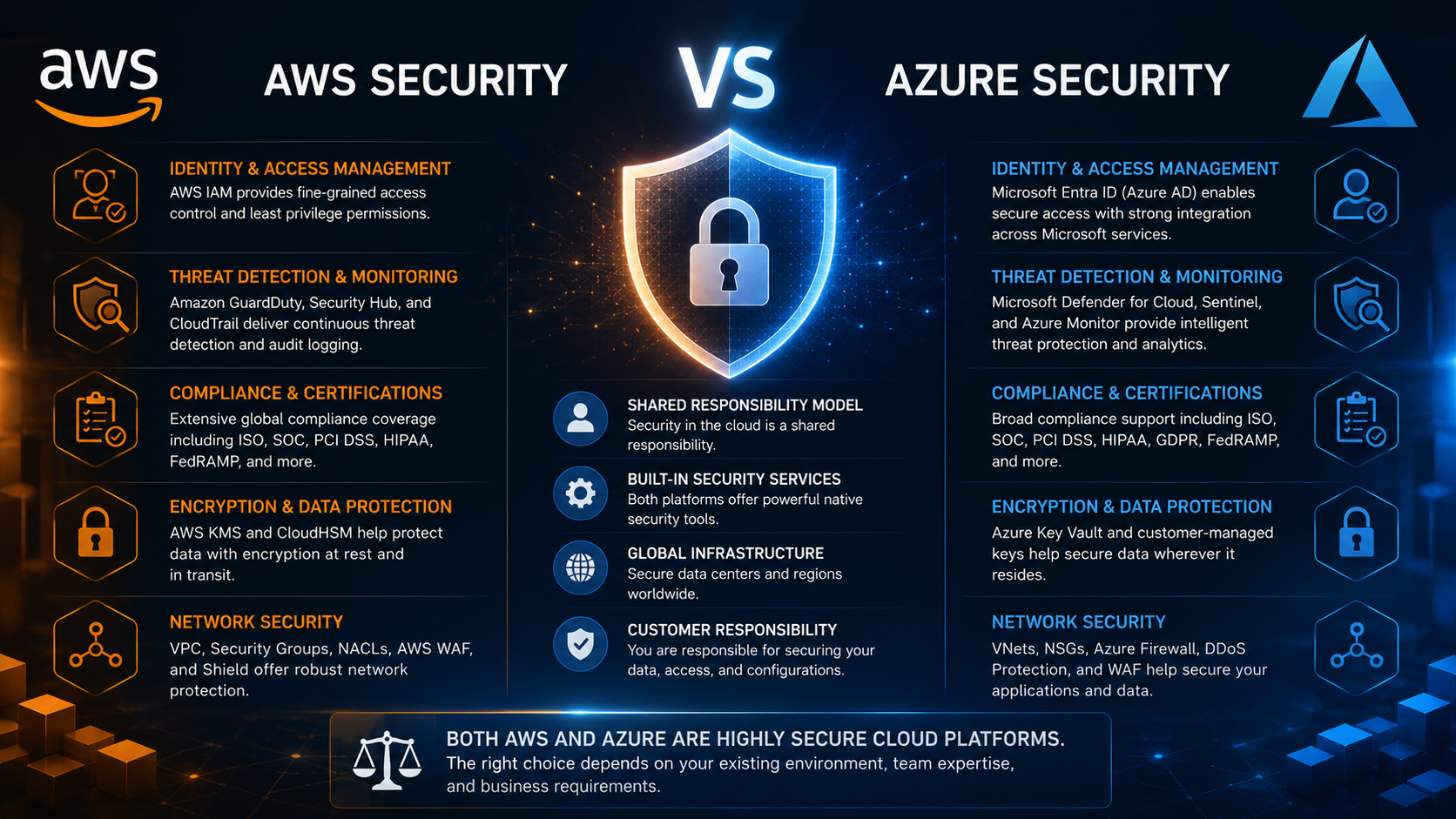
Amazon Web Services (AWS) and Microsoft Azure are two of the most widely used cloud platforms in the world. Both providers offer highly advanced security capabilities, global infrastructure, and enterprise-grade compliance programs.
However, businesses evaluating cloud platforms often ask an important question:
Which platform is more secure?
The reality is that both AWS and Azure provide strong security foundations. The biggest security differences usually come down to configuration, management practices, integrations, and how organizations use the platform.
Understanding the strengths, differences, and security features of each provider can help businesses make better cloud security decisions.
Shared Responsibility Model
Both AWS and Azure operate under a shared responsibility model.
This means the cloud provider is responsible for securing the underlying infrastructure, while customers remain responsible for securing:
• User access
• Applications
• Data
• Operating systems
• Network configurations
While AWS and Azure secure their own data centers and core services, businesses must still properly configure and manage their cloud environments to remain secure.
Identity and Access Management
Identity and access management is one of the most important aspects of cloud security.
AWS uses AWS Identity and Access Management (IAM), which provides highly granular permission controls and policy-based access management.
Azure relies heavily on Microsoft Entra ID (formerly Azure Active Directory), which integrates closely with Microsoft 365, Windows environments, and enterprise identity systems.
AWS IAM is often praised for flexibility and fine-grained control, while Azure is commonly preferred by organizations already using Microsoft infrastructure and identity ecosystems.
Both platforms support:
• Multi-factor authentication (MFA)
• Role-based access control (RBAC)
• Single sign-on (SSO)
• Conditional access policies
• Identity monitoring and logging
Security Monitoring and Threat Detection
AWS and Azure both provide native security monitoring tools designed to help businesses identify threats and respond to suspicious activity.
AWS security monitoring services include:
• AWS GuardDuty
• AWS Security Hub
• AWS CloudTrail
• Amazon Inspector
Azure security monitoring services include:
• Microsoft Defender for Cloud
• Azure Monitor
• Microsoft Sentinel
• Azure Security Center
Azure often stands out for its integration with Microsoft's broader security ecosystem, while AWS is known for its scalability and mature cloud-native tooling.
Compliance and Certifications
Both AWS and Azure maintain extensive compliance certifications across industries and regions.
Common certifications include:
• ISO 27001
• SOC 1, 2, and 3
• PCI DSS
• HIPAA
• GDPR support
• FedRAMP
AWS typically offers a broader range of global regions and compliance documentation, while Azure is often favored by organizations with strict Microsoft enterprise governance requirements.
Compliance alone does not guarantee security. Businesses must still configure their environments according to best practices and internal policies.
Encryption and Data Protection
Both cloud providers support strong encryption capabilities for protecting sensitive business data.
AWS offers services such as:
• AWS Key Management Service (KMS)
• CloudHSM
• Server-side encryption options
Azure provides:
• Azure Key Vault
• Azure Disk Encryption
• Customer-managed encryption keys
Both platforms support encryption for data at rest and in transit, though implementation details and integrations may vary depending on the workload.
Network Security Capabilities
AWS and Azure both provide advanced networking and segmentation features designed to isolate workloads and reduce exposure.
AWS networking security tools include:
• Virtual Private Cloud (VPC)
• Security Groups
• Network ACLs
• AWS WAF
Azure networking security tools include:
• Virtual Networks (VNets)
• Network Security Groups (NSGs)
• Azure Firewall
• Azure DDoS Protection
Both providers allow businesses to implement segmented architectures, private networking, and zero-trust security strategies.
Ease of Security Management
Security management experiences differ between AWS and Azure.
AWS often provides more granular customization and flexibility, making it popular with highly technical cloud teams and organizations building large-scale cloud-native environments.
Azure is frequently considered easier to integrate into existing Microsoft-based enterprise environments, especially for organizations already using:
• Windows Server
• Active Directory
• Microsoft 365
• Microsoft Defender
The best choice often depends less on the provider itself and more on the organization's existing infrastructure, expertise, and operational requirements.
Which Cloud Platform Is More Secure?
There is no universal answer to whether AWS or Azure is more secure. Both providers invest heavily in cybersecurity and maintain highly secure global infrastructure.
Most cloud security incidents occur because of customer-side issues such as:
• Misconfigured storage
• Weak access controls
• Missing monitoring
• Poor credential management
• Unpatched systems
In practice, a well-managed AWS environment can be extremely secure, just as a well-managed Azure environment can be extremely secure.
The strongest cloud security strategy focuses on governance, visibility, monitoring, and continuous security validation regardless of the cloud provider being used.
Return to blog
