Cloud Security Best Practices for Businesses
April 30, 2026 | Cloud Security
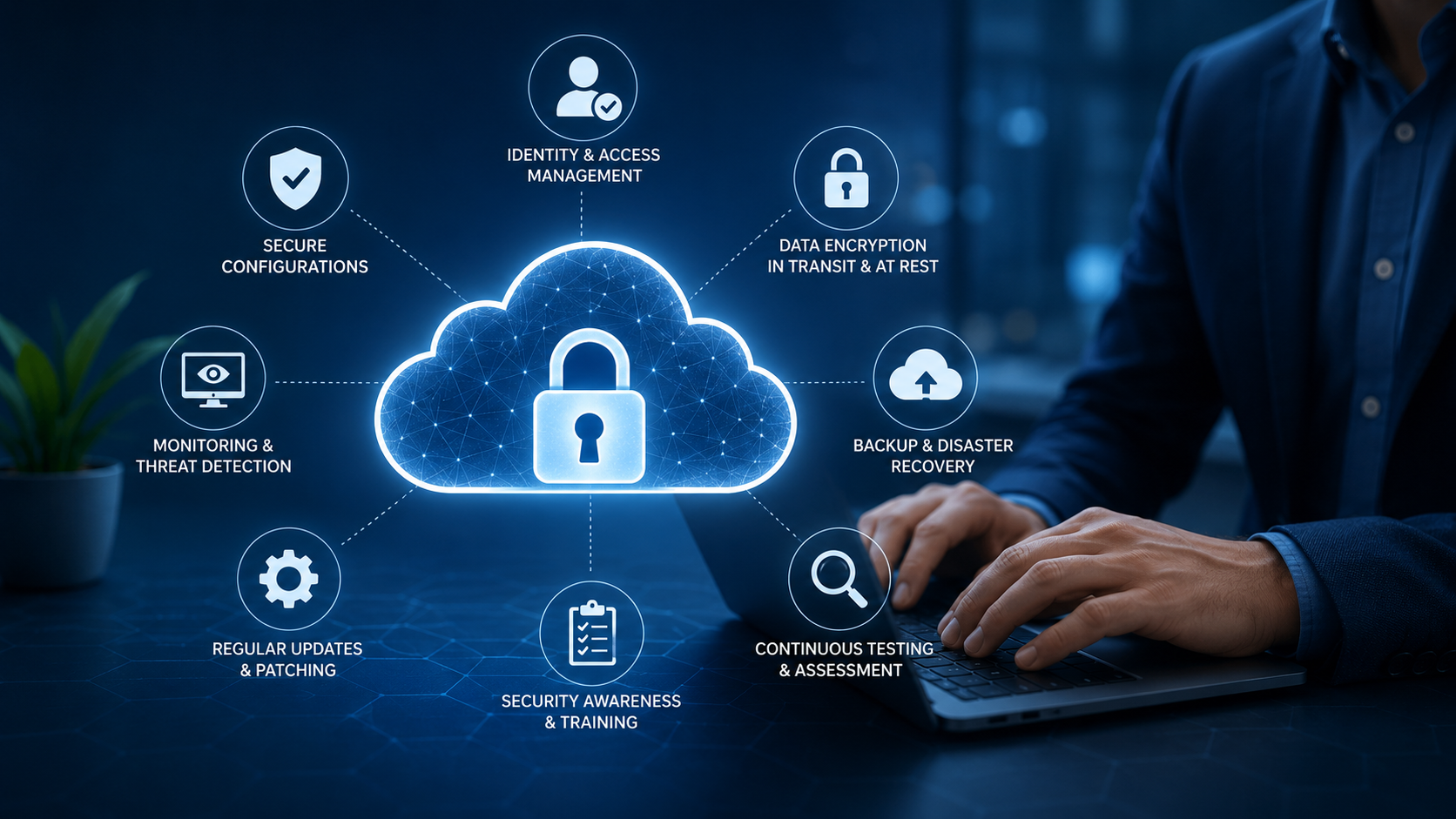
As more businesses move critical operations to the cloud, security has become a top priority. Cloud platforms like AWS, Microsoft Azure, and Google Cloud offer powerful infrastructure and built-in security capabilities, but securing your environment is still your responsibility.
Many cloud breaches are not caused by sophisticated attacks. Instead, they happen because of preventable mistakes such as weak passwords, overly broad permissions, exposed storage buckets, or missing monitoring tools.
Whether you operate a small business or a large enterprise, following cloud security best practices can significantly reduce your risk and improve your resilience against cyber threats.
Understand the Shared Responsibility Model
One of the most important concepts in cloud security is the shared responsibility model. Cloud providers secure the underlying infrastructure, while customers remain responsible for securing their own data, applications, user access, and configurations.
This means that even when using a trusted cloud provider, businesses still need to actively manage security settings, monitor risks, and implement internal controls.
Misunderstanding this responsibility is one of the leading causes of cloud security incidents.
Use Strong Identity and Access Management
Access management is one of the most critical layers of cloud security. Businesses should apply the principle of least privilege, ensuring users only have access to the systems and data required for their role.
Best practices include:
• Enabling multi-factor authentication (MFA)
• Using role-based access control (RBAC)
• Regularly reviewing user permissions
• Removing unused accounts immediately
• Restricting administrator privileges
Overly permissive access is a common weakness that attackers actively exploit.
Encrypt Sensitive Data
Encryption helps protect sensitive business data from unauthorized access. Organizations should encrypt data both at rest and in transit.
Most major cloud providers offer native encryption tools, but businesses must ensure they are properly configured and managed.
It is also important to:
• Manage encryption keys securely
• Rotate keys regularly
• Limit key access to authorized personnel
• Monitor for unauthorized key usage
Encryption is especially important for organizations handling customer information, financial records, healthcare data, or intellectual property.
Continuously Monitor Cloud Environments
Cloud environments change constantly. New users, services, integrations, and deployments can introduce security risks if they are not monitored properly.
Businesses should implement continuous monitoring to detect suspicious behavior, configuration drift, and unauthorized access attempts.
Effective monitoring includes:
• Centralized logging
• Threat detection alerts
• Automated security scanning
• Cloud configuration monitoring
• Real-time incident response workflows
Visibility is essential for identifying threats before they become serious security incidents.
Keep Systems Updated and Patched
Outdated systems remain one of the easiest ways for attackers to gain access to cloud environments. Businesses should maintain a consistent patch management process across all cloud workloads.
This includes:
• Applying security updates quickly
• Removing unsupported software
• Updating container images regularly
• Monitoring third-party dependencies
Automated patching solutions can help reduce human error and improve overall security posture.
Secure Backups and Disaster Recovery
Backups are a critical part of cloud security and business continuity. Ransomware attacks, accidental deletion, and system failures can all result in major data loss.
Businesses should ensure backups are:
• Encrypted
• Stored separately from production systems
• Tested regularly
• Protected against unauthorized modification
A strong disaster recovery strategy helps organizations recover quickly and minimize downtime after a security incident.
Train Employees on Cloud Security Awareness
Technology alone cannot prevent every security incident. Employees play a major role in protecting cloud environments.
Businesses should provide regular security awareness training focused on:
• Phishing attacks
• Password hygiene
• Secure file sharing
• Identifying suspicious activity
• Safe use of cloud applications
Human error continues to be one of the biggest contributors to cybersecurity breaches.
Regularly Test Your Cloud Security
Security testing helps businesses identify vulnerabilities before attackers do. Regular cloud security assessments, vulnerability scans, and penetration testing can uncover weaknesses in configurations, applications, and access controls.
Testing also helps organizations validate compliance requirements and improve incident response readiness.
Security is not a one-time project. It requires ongoing evaluation and continuous improvement.
Return to blog
